Agenda
November 11, 08:30 – 09:15 (WIB/Jakarta Time)
Opening Ceremony / Sesi Pembukaan

Abdul Mu’ti
Keynote Address
Ceramah Kunci

Matius Ho
Welcome Remarks
Sambutan Pembuka

W. Christopher Stewart
Formal Greetings
Sambutan Resmi

Brett Scharffs
Formal Greetings
Sambutan Resmi

Abidin Wakano
Opening Prayer
Doa Pembuka
November 11, 09:15 – 09:45 (WIB/Jakarta Time)
Break / Istirahat
November 11, 09:45 – 11:00 (WIB/Jakarta Time)
Panel 1
Education to Foster Social Trust in a Polarized World

Fajar Riza Ul Haq
Panel Keynote
Pembicara Kunci Panel

Edson Byron K. Sy
Speaker
Narasumber

Ali Rashed Al Nuaimi
Speaker
Narasumber

Gusti Ayu Putu Suwardani
Speaker
Narasumber

Andreas Weissenbäck
Speaker
Narasumber

Amin Abdullah
Speaker
Narasumber

Ranie Kasmir
Moderator
Focusing on the role of education in building social trust in a multifaith and multicultural society amidst increasing polarizations and divisions in the world. In addition to that, how cross-cultural religious literacy in education can nurture the necessary competencies and skills to strengthen social cohesion and build bridges across people of deep differences in a diverse society.
Panel ini akan berfokus pada peran pendidikan dalam membangun kepercayaan sosial di tengah masyarakat multikeagamaan dan multikultural di era meningkatnya polarisasi dan perpecahan global. Selain itu, panel ini juga akan membahas bagaimana Literasi Keagamaan Lintas Budaya dalam pendidikan dapat menumbuhkan kompetensi dan keterampilan yang diperlukan untuk memperkuat kohesi sosial serta menjembatani perbedaan di masyarakat yang beragam.
November 11, 11:00 – 12:15 (WIB/Jakarta Time)
Panel 2
The Importance of Social Trust in Upholding Human Dignity

Brett Scharffs
Speaker
Narasumber

Alwi Shihab
Speaker
Narasumber

Alexander Rieger
Speaker
Narasumber

Achsanul Habib
Speaker
Narasumber

Siti Nurul Azkiyah
Moderator
Focusing on the role of social trust—and related to that, social solidarity—in the advancement of human dignity, and how such a relational understanding of human dignity can bring new insights into the promotion and protection of human rights as an expression of the call to “act towards one another in a spirit of brotherhood” (Article 1, Universal Declaration of Human Rights).
Panel ini berfokus pada peran kepercayaan sosial—dan dalam kaitannya, solidaritas sosial—dalam memajukan martabat manusia. Pemahaman yang bersifat relasional tentang martabat manusia ini diharapkan dapat memberikan wawasan baru dalam upaya promosi dan perlindungan hak asasi manusia, sebagai perwujudan dari panggilan untuk “to act towards one another in a spirit of brotherhood” (Article 1, Universal Declaration of Human Rights).
November 11, 12:15 – 14:00 (WIB/Jakarta Time)
Lunch / Makan Siang
November 11, 14:00 – 15:15 (WIB/Jakarta Time)
Panel 3
Implementation of Cross-Cultural Religious Literacy in Education

Matius Ho
Speaker
Narasumber

Muhammad Kafrawy
Speaker
Narasumber

Salomina Patty
Speaker
Narasumber

Sarifudin
Speaker
Narasumber

Budi Setiamarga
Moderator
Presenting the Indonesian case study of Cross-Cultural Religious Literacy in education to strengthen social cohesion and discussing the lessons learned and its potential for further development and adaptation in other societies.
Panel ini akan mengangkat praktik penerapan Cross-Cultural Religious Literacy di Indonesia dalam pendidikan untuk memperkuat kohesi sosial, serta membahas pembelajaran yang diperoleh dan potensi pengembangannya di berbagai konteks masyarakat lain.
November 11, 15:15 – 15:45 (WIB/Jakarta Time)
Break / Istirahat
November 11, 15:45 – 17:00 (WIB/Jakarta Time)
Panel 4
Rebuilding Social Trust in a Digital World

Laksmi Dewi
Speaker
Narasumber

Irina Nalis-Neuner
Speaker
Narasumber

Ismunandar
Speaker
Narasumber

Vaishnavi J
Speaker
Narasumber

Brett Scharffs
Speaker
Narasumber

Muhammad Thohir
Moderator
This panel explores the erosion—and potential rebuilding—of social trust in the digital age. How do technologies like AI and social media affect how we relate to institutions, communities, and each other? What role do transparency, digital literacy, and ethical design play in restoring trust? And what responsibilities do technologists, policymakers, and citizens share in this process? What education strategy do we need?
Panel ini akan membahas kemerosotan—serta potensi pembangunan kembali—kepercayaan sosial di era digital. Bagaimana teknologi seperti kecerdasan buatan (AI) dan media sosial memengaruhi cara kita berinteraksi dengan lembaga, komunitas, dan sesama? Peran apa yang dimainkan oleh transparansi, literasi digital, dan desain etis dalam memulihkan kepercayaan? Tanggung jawab apa yang dimiliki oleh teknolog, pembuat kebijakan, dan warga masyarakat dalam proses ini? Dan strategi pendidikan seperti apa yang dibutuhkan untuk menumbuhkan kembali kepercayaan sosial di dunia digital?
November 11, 18:15 – 18:30 (WIB/Jakarta Time)
Pre-Dinner Reception / Resepsi Pra-makan malam
November 11, 18:30 – 21:00 (WIB/Jakarta Time)
Dinner Reception / Resepsi makan malam

Arrmanatha C. Nasir
Remarks
Sambutan

Nobuko Kayashima
Remarks
Sambutan
- Video: “Dialogue Residency: Building Bridges through Dialogue”, Federal Ministry of European and International Affairs of the Republic of Austria
- Special Performance by teachers from Maluku.
Introduction by:
Penampilan Spesial oleh Guru-guru dari Maluku.
Perkenalan oleh:

Sarah Weiss
November 12, 08:30 – 09:00 (WIB/Jakarta Time)

Nasaruddin Umar
Keynote Speaker
Ceramah Kunci
November 12, 09:00 – 10:30 (WIB/Jakarta Time)
Panel 5
Government and Civil Society: Synergy in Education to Promote Social Trust

Akhmad Muzakki
Speaker
Narasumber

Elifas Maspaitella
Speaker
Narasumber

Maho Nakayama
Speaker
Narasumber

Partono Nyana Suryanadi Mahathera
Speaker
Narasumber

Indo Santalia
Speaker
Narasumber

Hamzah Khaeriyah
Speaker
Narasumber

Yayah Khisbiyah
Moderator
Focusing on the roles of government and civil society to address various issues through education and religious engagement in communities, their importance and whether and how they can be further integrated into national and international efforts to strengthen an inclusive society amidst the religious and cultural diversity.
Panel ini akan berfokus pada peran pemerintah dan masyarakat sipil dalam menjawab berbagai tantangan melalui pendidikan dan keterlibatan keagamaan di masyarakat. Pembahasan ini akan menyoroti pentingnya kolaborasi antara kedua sektor tersebut serta bagaimana sinergi tersebut dapat diintegrasikan lebih lanjut dalam upaya nasional dan internasional untuk memperkuat masyarakat yang inklusif di tengah keberagaman agama dan budaya.
November 12, 10:30 – 11:00 (WIB/Jakarta Time)
Break / istirahat
November 12, 11:00 – 12:15 (WIB/Jakarta Time)
Breakout Session A
November 12, 12:15 – 13:30 (WIB/Jakarta Time)
Lunch / makan siang
November 12, 13:30 – 14:45 (WIB/Jakarta Time)
Breakout Session B
November 12, 14:45 – 15:15 (WIB/Jakarta Time)
Break / istirahat
November 12, 15:15 – 16:30 (WIB/Jakarta Time)
Panel 6
Cross-Cultural Religious Literacy for an Inclusive and Cohesive ASEAN Community

Yuliana Bahar
Speaker
Narasumber

La Viseis
Speaker
Narasumber

Aldrin M. Peñamora
Speaker
Narasumber

Adam Hamzah
Speaker
Narasumber

Tran Phuong Chi
Speaker
Narasumber

Yuyun Wahyuningrum
Moderator
Focusing on the opportunities and challenges for a cross-cultural religious literacy approach in the ASEAN Community that can foster multi-faith and multicultural collaboration to maintain and enhance peace, security and stability, to strengthen peace-oriented values in the region, and to promote a common ASEAN identity.
Panel ini akan berfokus pada peluang dan tantangan penerapan pendekatan Cross-Cultural Religious Literacy di lingkungan Komunitas ASEAN, yang dapat mendorong kolaborasi lintas agama dan lintas budaya guna memelihara serta memperkuat perdamaian, keamanan, dan stabilitas di kawasan ASEAN. Diskusi ini juga akan menyoroti bagaimana pendekatan tersebut dapat berkontribusi dalam memperkuat nilai-nilai yang berorientasi pada perdamaian serta memajukan identitas bersama ASEAN.
November 12, 16:30 – 17:00 (WIB/Jakarta Time)
Closing Session / sesi penutup

Atip Latipulhayat
Closing Remarks
Sambutan Penutup

Duwijo
Closing Prayer
Doa Penutup
Breakout Sessions
Breakout Sessions A (11:00 – 12:15 WIB/Jakarta time)
1. Love-based Curriculum in Higher Education to Strengthen Social Trust in a Diverse Society

Sahiron Syamsuddin
Speaker
Narasumber

Muhammad Thohir
Speaker
Narasumber

Abidin Wakano
Speaker
Narasumber

Listia Suprobo
Moderator
2. Building Social Trust Through Music: Experience from Maluku

Sarah Weiss
Speaker
Narasumber

Hasbollah Toisuta
Speaker
Narasumber

Petrosina Waremra
Moderator
3. The Role of Education in Preventing Human Trafficking

Theresia Erni
Speaker
Narasumber

Agustina Siahaya
Moderator
4. Cross-Cultural Interreligious Dialogue and Multi-Faith Collaboration Practices in International Relations

Ani Nigeriawati
Speaker
Narasumber

Alexander Rieger
Speaker
Narasumber

Trimo
Moderator
Breakout Sessions B (13:30 – 14:45 WIB/Jakarta time)
1. Character Building to Strengthen Social Trust in a Diverse Society

Rusprita Putri Utami
Speaker
Narasumber

Arif Jamali Muis
Speaker
Narasumber

Agus Mohamad Solihin
Moderator
2. Religious and Cultural Sites for Promoting Social Trust

Knox Thames
Speaker
Narasumber

Farid F. Saenong
Speaker
Narasumber

Moch. Taufiqurrahman
Moderator
3. Fostering Socio-Cultural Competencies for Government Officials to Strengthen Social Trust in a Diverse Society

Mutia Farida
Speaker
Narasumber

Asep Rohimat
Moderator
4. Human Dignity and Rule of Law Training to Strengthen an Inclusive Society

Hannah Smith
Speaker
Narasumber

Maruarar Siahaan
Speaker
Narasumber

Muhammad Kafrawy
Moderator
Gallery
Press
Background
The intensification of globalization is establishing unprecedented connections between people in previously unconnected areas. As it accelerates the movement of people, ideas, and cultures across borders, societies become increasingly diverse, giving rise to plural societies where multiple ethnic, religious, and cultural groups coexist. The world is more and more interconnected, but it does not mean that individuals and societies live together. Today there is more information, technology, and knowledge available than ever before, but adequate wisdom is still needed to prevent conflicts, to eradicate poverty or to make it possible for all to learn to live in harmony in a safe world[1].
The acknowledgment of diversity, the promotion of interfaith and intercultural dialogue and upholding human dignity are the main parameters for the consolidation of democracy, freedom, respect, equality, peace and social cohesion. Meaningful engagement with those who are different from ‘‘us’’ requires intercultural and interreligious competences as fundamental life skills in today’s interconnected world. While globalization and technological advancements bring many benefits, they also come with challenges, including fears of losing cultural or personal identity. These concerns can fuel an “us vs. them” mentality, leading to stereotypes, prejudice, and xenophobia, which may escalate tensions and, in extreme cases, result in conflict.
Show More
Cross-cultural religious literacy (CCRL) plays a vital role in fostering social trust by building cooperation and meaningful engagement among diverse communities. Beyond traditional interfaith dialogues that focus on exchanging religious knowledge, CCRL initiatives, such as those in Indonesia, offer a structured educational approach to developing competencies that promote peaceful multi-faith collaboration. This aligns with Robert D. Putnam’s research, which highlights the cyclical nature of social capital—where trust facilitates cooperation, and cooperation, in turn, reinforces trust. In pluralistic societies, bridging social capital, which connects individuals across religious and cultural divides, is crucial for fostering intergroup acceptance and reducing polarization. By equipping individuals with the skills to navigate religious diversity with empathy and understanding, CCRL strengthens networks of cooperation, creating resilient communities where collaboration transcends religious boundaries, ensuring social harmony and stability.
With its emphasis on collaboration and trust building, cross-cultural religious literacy is in line with the recommendation of the UNESCO’s International Commission on the Futures of Education in 2021, when it says that “Reimagining the future together calls for pedagogies that foster cooperation and solidarity.” More broadly, in the words of ASEAN Socio-Cultural Community Strategic Plan 2045, cross-cultural religious literacy can “[e]nhance cooperation and dialogue to strengthen the culture of tolerance and moderation, promote cultural pluralisms and responsible citizenship” (SM. 1.2.6) and can “foster a culture of respect for all, unity in diversity, and a common identity” (SM. 9.1.7). The ASEAN Political-Security Community Strategic Plan 2045 includes “conducting a series of cross-cultural religious literacy programmes” (SM. 9.7) to achieve the goal of an “inclusive and cohesive Community.”
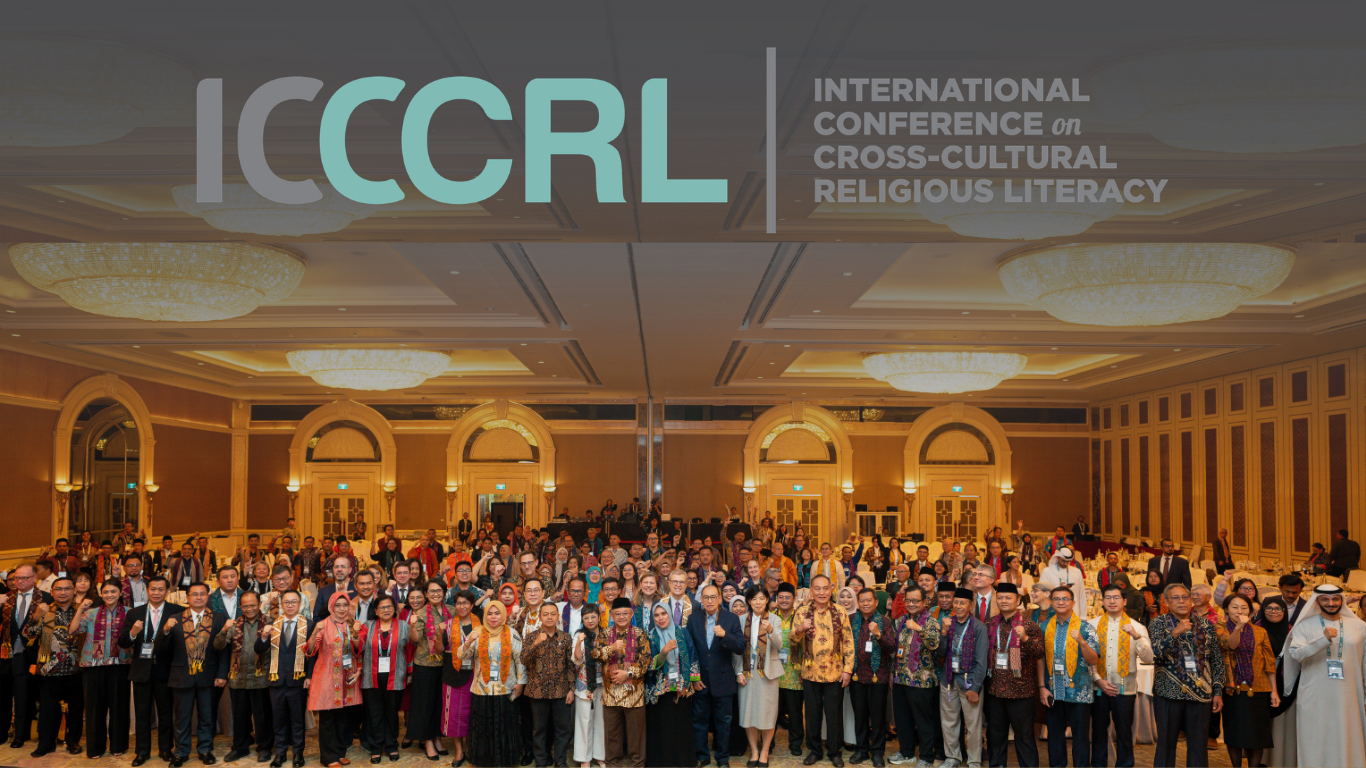
This conference will explore how multifaith and multicultural collaborations can build social capital, in particular social trust, in an increasingly polarized world. It will examine how such an approach can build a stronger foundation in a society for the respect, promotion, and protection of human dignity. The importance of multi-faith and multicultural collaborations in fostering social trust is becoming more evident through the experience of the Cross-Cultural Religious Literacy program in Indonesia. Since late 2021, the program has trained more than 10,000 teachers nationwide in partnership with 40 religious and education institutions, and also the Indonesian government.
The conference will discuss the significance of human dignity as the foundation to build social trust. It will also discuss more on how education plays a vital role in building trust-based relationships and promoting collective action, which in turn fosters social trust and strengthens social cohesion.
The conference will also discuss how Cross-Cultural Religious Literacy and similar initiatives in the Southeast Asian region can support the vision of ASEAN as an inclusive and cohesive community that respects political, social, religious, cultural and ethnic differences. It will also bring into conversation the perspectives and experiences of interfaith activities and initiatives from around the world.
—
[1] United Nations Educational, Scientific and Cultural Organization (UNESCO) (2013). UNESCO’s Programme of Action: Culture of Peace and Non-Violence; A vision in Action